FOUR STAGES — Timothy R. Clark
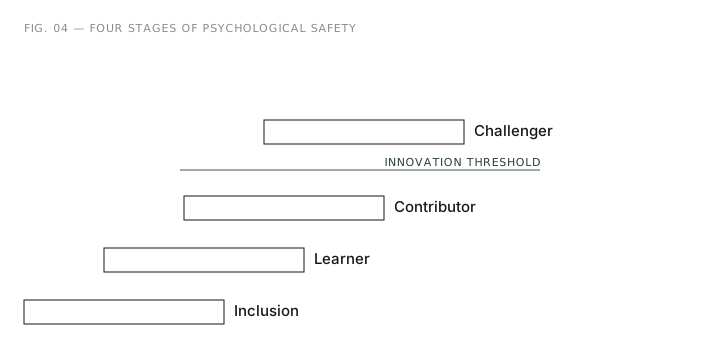
Safety as a developmental progression, not a binary. Inclusion safety → Learner safety → Contributor safety → Challenger safety, with an innovation threshold between the last two.
Why it resonates
Safety is one of those words that has been sanded smooth by repetition. Clark’s frame gives it edges back. Many of the teams I work with are already strong on inclusion safety — people feel socially accepted — and weak on challenger safety, where someone can push back on the director in the room without a career penalty. That gap is where most AI-era problems live. If a product leader cannot be told “this is the wrong bet” by the person closest to the work, no amount of AI tooling will save the decision. Clark’s progression gives leaders a diagnostic, not a slogan — they can name which stage their team is sitting at, and design for the next one.
How I’ve used it
In a coaching engagement with a VP of Product, I used the four stages to audit his team’s behaviour over six meetings. The audit put them at strong Contributor safety but flat Challenger safety. I designed three small leader experiments with him — inviting dissent by name, narrating his own mistakes in public, rewarding the first pushback of the meeting. Three months in, the board decks carried fewer surprises, and two product bets that would have shipped a quarter earlier got the challenge they deserved.
— Timothy R. Clark, The 4 Stages of Psychological Safety: Defining the Path to Inclusion and Innovation, (2020). Building on Amy C. Edmondson's foundational work on psychological safety in teams.