
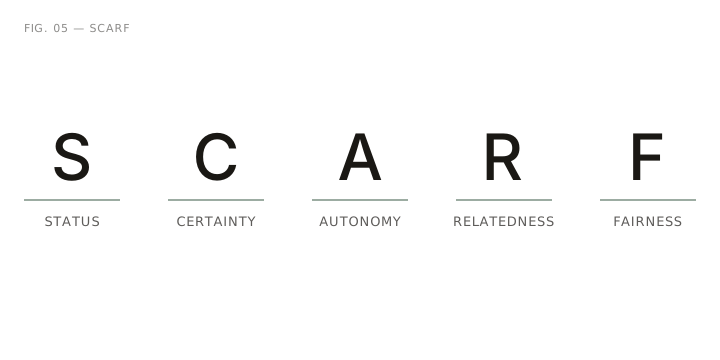
SCARF — David Rock
Five social domains the brain processes as physical threat or reward — Status, Certainty, Autonomy, Relatedness, Fairness. A drop in any one narrows cognition, collaboration, and creativity on the spot.
Why it resonates
Organisational change is mostly threat response management. SCARF names the five levers that produce that response, and it names them neurologically — which matters, because it takes the debate out of “was that personal or political?” and puts it into “which of the five got pulled?”. When a reorg blows up, it is almost always because three of the five went negative at once. When a change lands cleanly, someone designed it with two or three of the five in mind. SCARF is the single most useful predictive frame I have for how a leadership decision will be received on the Tuesday morning after it is announced — which is the morning that matters.
How I’ve used it
Before a tooling migration that affected six hundred people, I ran a pre-mortem with the sponsor and mapped the announcement across the five domains. The pre-mortem surfaced two certainty risks and one status risk the sponsor had not seen. I rewrote the all-hands with her accordingly, and added a small autonomy lever — each team chose their own migration week. Resistance was notably below what the org had braced for. The sponsor has kept SCARF as a standing rubric on every major communication since.
— David Rock, SCARF: A brain-based model for collaborating with and influencing others, NeuroLeadership Journal (2008).