
SIX PRINCIPLES — Greg Satell
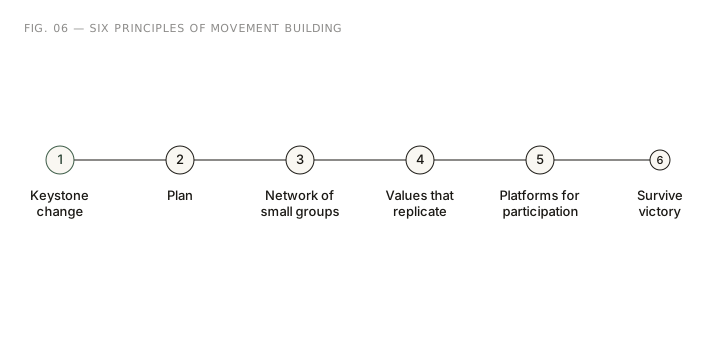
Change is a movement, not a project. Six principles — a keystone change, a plan, a network of small groups, values that replicate, platforms for participation, and the hardest one, surviving victory.
Why it resonates
The way most organisations run transformation programmes is approximately the opposite of how change actually spreads. Broadcasts, not networks. Mandates, not values. End-of-project parties, not survival rituals for the new status quo. Satell’s frame, drawn from studying activist movements, reminded me that the technology of change is social, not managerial. The keystone principle in particular is a gift: name the one behaviour or decision right that would make everything else easier, and stop negotiating the other twenty. Under AI-adoption conditions — where the default shape is a top-down mandate — this frame is a useful counter-weight. It refuses the project-plan reflex.
How I’ve used it
On a cross-organisational change programme, I used the six principles to critique the plan the sponsor team had drafted. The programme had platforms but no keystone. It had a plan but no network of small groups. I rebuilt the backbone with the sponsor around twenty paired small-group conversations and one concrete keystone behaviour — a changed weekly forum ritual — and the movement started carrying itself. A year in, the ritual was still running without a programme manager behind it, which is the only measure of movement that counts.
— Greg Satell, Cascades: How to Create a Movement that Drives Transformational Change, (McGraw-Hill, 2019).